Fallen but standing: Artbooth presents David Najib Kasir at its NYC debut fair
- Last updated: April 15, 2026 | 08:58


Muhammad Yusuf, Features Writer
Artbooth Gallery, Abu Dhabi, has announced Beauty and Ruin, a solo exhibition by Milwaukee-based artist, David Najib Kasir. The exhibition will be showcased at Future Fair New York from May 14 to 16, Booth F13. In this body of work, Kasir examines the role of Western media in shaping cultural narratives, while turning a caring and concerning lens toward the systemic destruction of families across the Middle East. Future Fair is a community-focused exhibition that champions curatorial vision, access and growth in the global art industry. Each year, it features around 60 artist presentations, ensuring focused engagement for participants and visitors alike in New York City. Since 2020, it has brought together diverse global artistic voices through in-person events, while its digital platforms provide storytelling and community engagement that extend well beyond the exhibition dates.
As an American artist born to a Syrian mother and Iraqi father, Kasir’s practice is a personal reclamation of his heritage against a backdrop of attempted geopolitical erasure. At the intersection of Beauty and Ruin, Kasir’s signature aesthetic employs the use of Zellige, traditional Arab geometric mosaic tiles and floral designs, to shroud his figures and environments. The juxtaposition serves a dual purpose: it honours the profound beauty of Middle Eastern culture, while highlighting the tragedy of its seeming collapse. “I dress the environment and figures in beautiful traditional designs to show the beauty of a culture and the tragedy as families try to hold on to it and each other as everything around them collapses apart,” says Kasir.
The works confront the viewer with the literal and metaphorical rubble left behind by occupational forces and civil unrest. By depicting neighbourhoods and streets that have become unrecognisable from his childhood memories, Kasir transforms the canvas into a space of mourning, resilience, and urgent political inquiry. “My work starts from a personal place,” he says. “I am not only expressing myself as an artist, but as a human who has witnessed years of dehumanisation and destruction of civilian life. These paintings ask how much devastation can be endured and remind viewers of the universal desire to protect family, culture, and memory.”
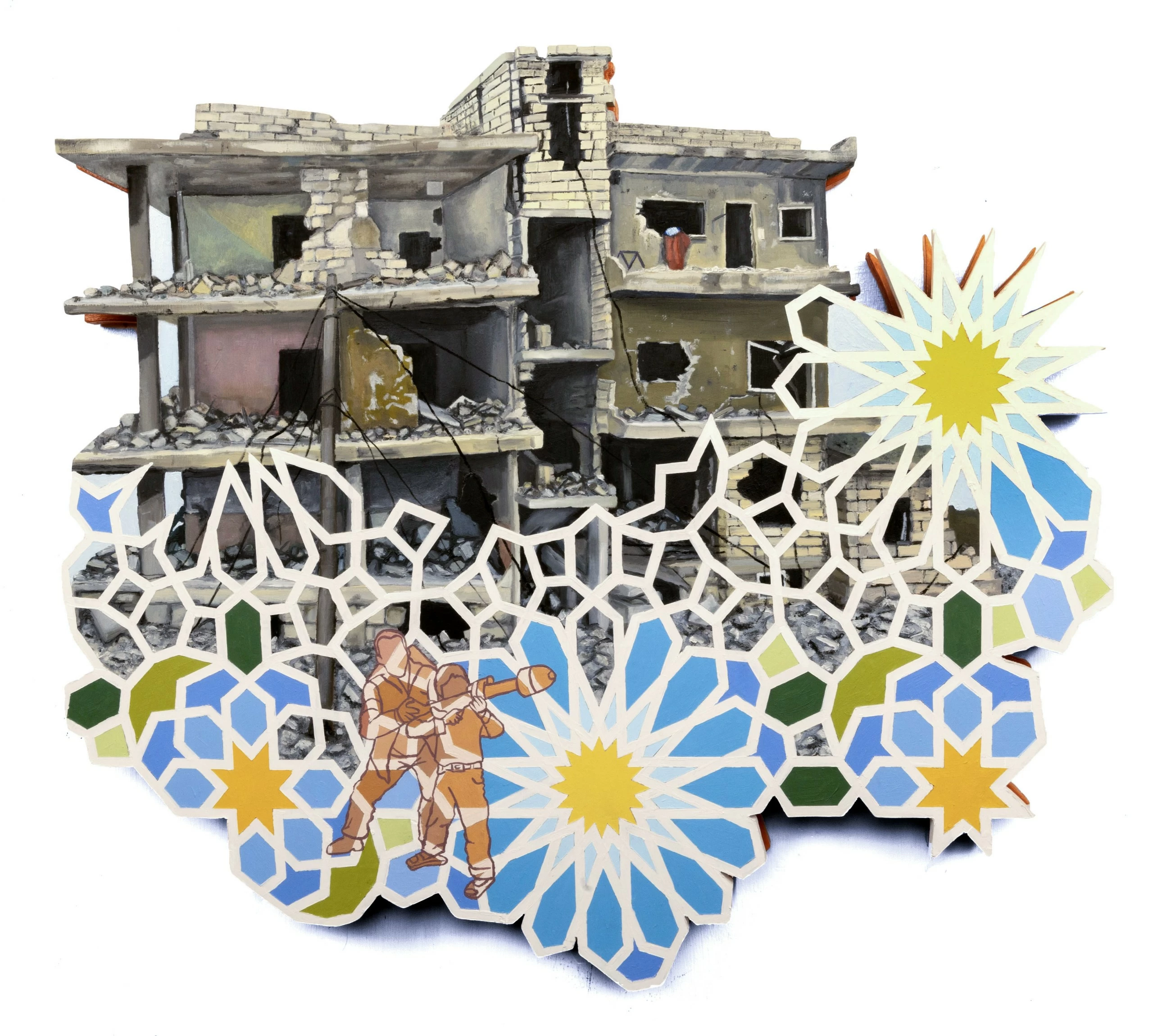
Beauty and Ruin is more than an aesthetic exploration: it is a visceral response to what the artist describes as years of media indifference toward civilian casualties and the ongoing genocide. The exhibition asks the haunting question: How much devastation and terror can be endured? Through his oil paintings, Kasir challenges the beauty and ruin that allows for the destruction of homes and lives, met largely by indifference and ignorance. He invites the audience to look past the headlines and recognise the universal desperation of families striving to remain intact amidst the ruins.
His work consists of personal narratives and cultural history or events and he reveals his cultural identity in paint and designs to inform viewers on the recent wars in Syria, in hopes of helping them develop an understanding of the millions of voiceless Arabs now living in chaos and disarray. He has a BFA in painting from Milwaukee Institute of Art & Design (2001). Kasir also interrogates the role Western media plays in constructing cultural narratives, while centering a sensitive lens on the destruction of Syria, the Middle East and its people, through large-scale paintings. “Iraq was my father’s country, and Syria is my mother’s as well as the second home of my youth,” he points out.
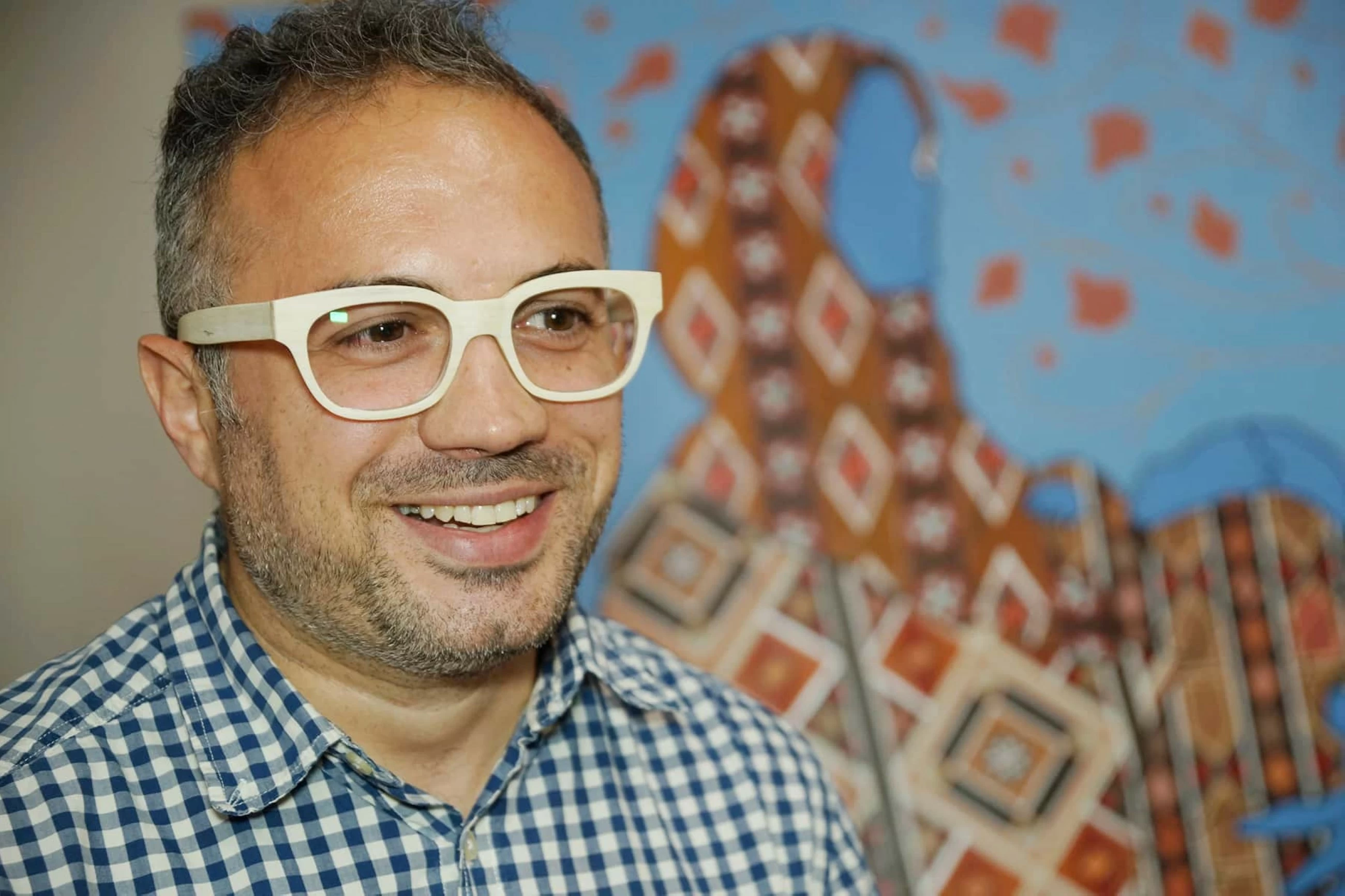
“It’s where my extended family were living. It’s where there were buildings I slept in and streets where I played tag and other games as a child. I’ve witnessed years of destruction of my countries from US invasions, with no regard from Western media of civilian casualties.” This personal experience fuelled his anger and frustration, giving way to big scale paintings that place viewers in the centre of devastated neighbourhoods. They are confronted with encounters between civilians and soldiers and families embracing, as they look on at the fallen buildings and rubble.
Making visible what happens to civilians is the intent of each work and is placed in the larger context of cultural significance, through the use of Arab designs. Kasir says that “I entrap the Syrian landscapes in Arab mosaic patterns, not as a backdrop, but as a culture of people trying to hold up their structured environment as best as they can with little to no help from others.” Says Cbs56.com: “His paintings reveal universal truths about war and displacement, grief, loss, and the impossible choices faced by civilians and refugees forced to flee neighbourhoods decimated by violence. They emphasise our shared humanity, offering viewers the chance to put themselves in the shoes of Kasir’s subjects and focus on the common threads that connect us, despite all perceived differences.”
Cbs56.com quotes the artist as saying that “at a time when people are so desensitised about what is human, I’m interested in reminding them ... I was seeing what was happening in Palestine, and I was seeing all the destruction ... that looked a lot worse than anything I’ve ever showed in my paintings ... that I’m always gonna have to remind people that we are human, and we are no different than they are.” Kasir draws inspiration from artists like Käthe Kollwitz and Diego Rivera, and believes in art as a documentation of time. He hopes to counter false narratives by showing both the beauty of Arab culture and the cost of conflict.