Uzbekistan’s apricots will blossom during Milan Design Week in Italy
- Last updated: April 8, 2026 | 10:11


Muhammad Yusuf, Features Writer
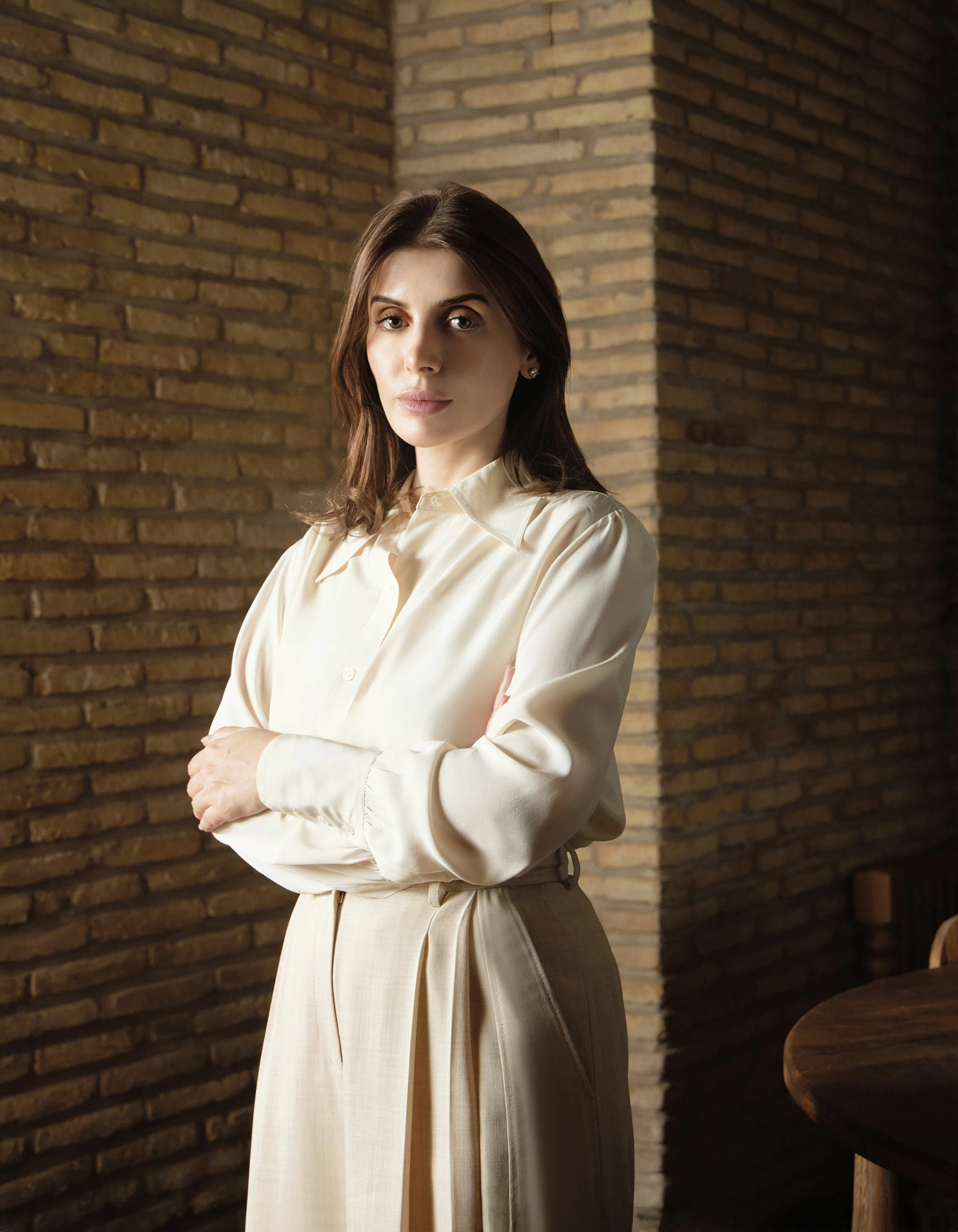
The Uzbekistan Art and Culture Development Foundation (ACDF) presents When Apricots Blossom, an immersive takeover of historic Palazzo Citterio in Brera during Milan Design Week 2026 (Apr. 20-26).
Commissioned by Gayane Umerova, ACDF Chairperson, the exhibition brings together thematic installations, new contemporary design commissions and live programming as expressions of cultural renewal to reframe and revive the material language and environmental legacy of the Aral Sea region and Karakalpakstan, in northwestern Uzbekistan.
Named after a 1930s poem by Uzbek playwright and literary scholar Hamid Olimjon - an ode to hope, optimism and possibility - and coinciding with spring in Milan, When Apricots Blossom traces a narrative of resilience in the Aral Sea region through craft and design. For decades, communities there have faced profound environmental change. In the 1960s, the Aral Sea began shrinking dramatically following the diversion of its feeder rivers for irrigation, causing it to lose over 90 per cent of its volume, turning one of the world’s largest inland lakes into desert.
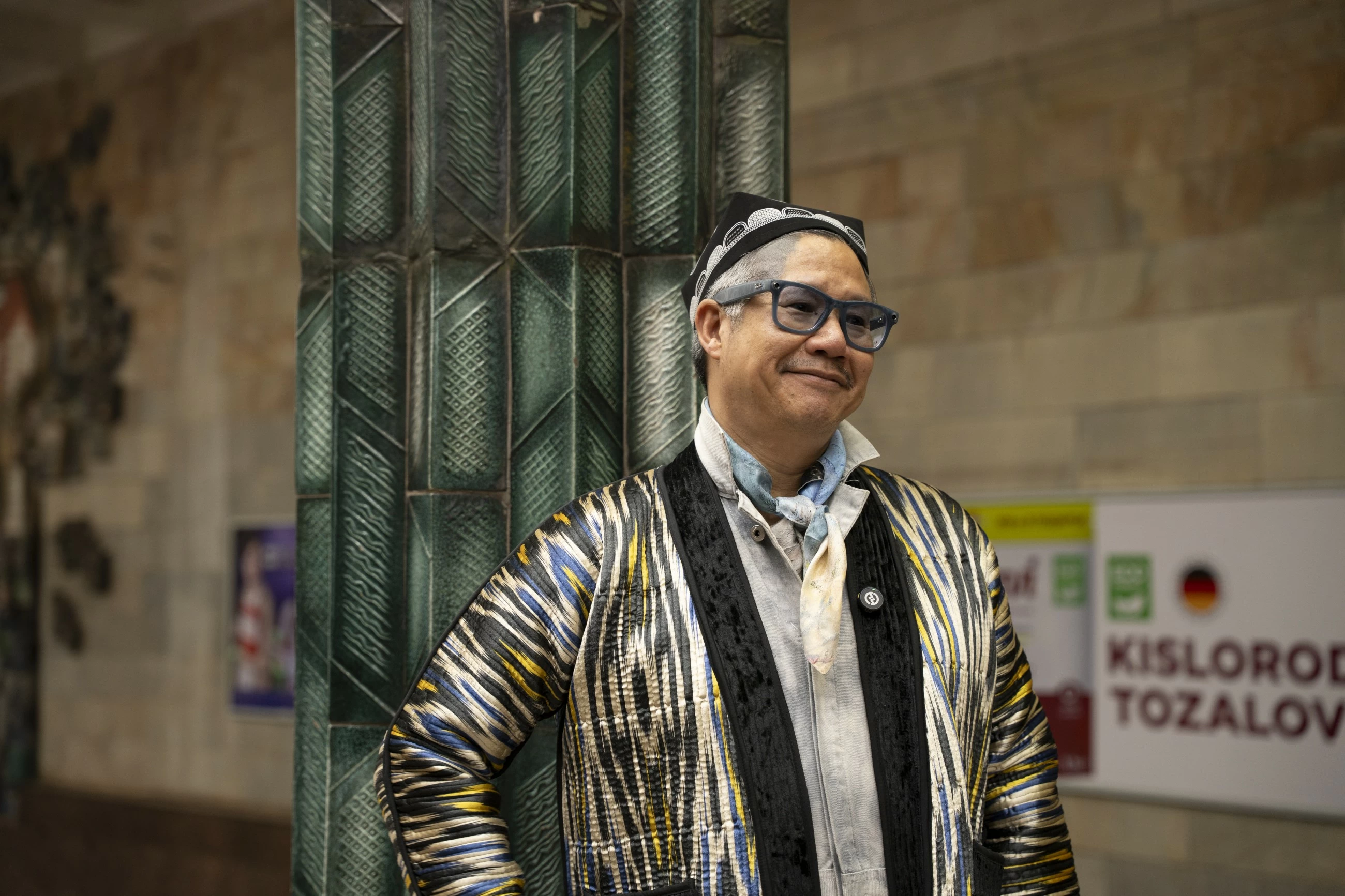
When Apricots Blossom unfolds as a spatial journey through Palazzo Citterio, guided by architect Kulapat Yantrasast’s focus on three core aspects of Karakalpak culture - textiles, food and shelter. He positions craft not as nostalgia, but as living knowledge: a system of making that carries memory, identity and adaptation across generations. On the palazzo’s facade, a large colourful tapestry is crafted by British designer Bethan Laura Wood in collaboration with Uzbek artisans. Transforming the entrance into a richly textured threshold, the ornate work draws on the heritage of textile craftsmanship in Uzbekistan.
Colourful bespoke tassels and hand woven ribbons, traditionally used to adorn nomadic yurts, cascade over the building. Known for her vibrant use of colour, Wood drew inspiration from her personal archive of antique textiles from Central Asia, alongside the colours and patterns she encountered while travelling through Uzbekistan for this project. The entrance courtyard greets visitors with an orchard-inspired interpretation of apricot trees, designed by Uzbek floral artist Ruben Saakyan. The apricot tree’s fruit is one of Uzbekistan’s significant exports and a symbol of hospitality and prosperity; it has proved remarkably resilient in the Aral Sea region, one of the world’s harshest environments for sustained agriculture.
A large ‘deconstructed yurt’, designed by WHY Architecture and conceived as a space for gathering, creates a focal point in the palazzo’s historic Milanese garden. Inspired by the mobility, artisanal construction and material preparation of traditional yurts from Karakalpakstan, the pavilion will host talks, workshops and events. At the heart of the exhibition in the main gallery, the story of the Aral Sea unfolds within an undulating topography of reed-like rods that evokes regional landscapes. Twelve contemporary designers were invited to create a custom bread tray and two bread stamps in collaboration with artisans in Uzbekistan.
Celebrating the central and sacred role of bread in Uzbek culture, cuisine and hospitality, the trays are designed to display traditional Uzbek bread (non). Decorative stamps (chekich) are used to stamp bread that is produced throughout the week during the exhibition. Designers used materials common to crafts in Karakalpakstan, including wood, silk, felt, ceramic and reed. Participating designers include Bethan Laura Wood (UK), Bobir Klichev (Uzbekistan), Didi NG Wing Yin (Finland, Hong Kong), Fernando Laposse (Mexico), Glithero (Netherlands, UK), Kulapat Yantrasast (Thailand, US), Marcin Rusak (Poland), Nifemi Marcus-Bello (Nigeria), Sanne Visser (Netherlands, UK), Sevara Haydarova Donazzan (Uzbekistan, Italy), Studio CoPain (Belgium) and Raw-Edges (UK).
The main gallery presentation also unveils a park redevelopment project in the regional capital of Nukus, an introduction to the Aral School; a design programme investigating resources and solutions for cultural and ecological regeneration, and the Aral Culture Summit, which is an emergent platform that brings together designers, architects, artists, scientists and policymakers to create new social, economic and cultural pathways using local knowledge and international expertise. A specially commissioned film, Where The Water Ends by filmmaker Manuel Correa and architect Marina Otero Verzier, introduces the Aral Sea region through the lives, rituals, and public forums of Karakalpak communities, asking how memory is preserved amid climate collapse.
Gayane Umerova says: “Uzbek craft and contemporary design are rooted in cultural continuity; so we want to contribute to this moment with new ways of thinking about place, resilience and regenerative practice while inspiring more thoughtful production, curation and consumption.” Kulapat Yantrasast, Curator of When Apricots Blossom, says: “When I travelled to Uzbekistan, what I found fascinating is that the craft traditions are ongoing, and almost uninterrupted by industrialisation. That’s not so true for many other cultures, where traditional crafts have been disrupted and now exist mainly for tourists. We’ve chosen to focus on the three craft forms of textiles, food and shelter, to provide a glimpse into the life of people in Karakalpakstan.”
The Aral Sea lies between Kazakhstan and Uzbekistan. It was once the fourth-largest freshwater lake in the world. Since the 1960s, it has lost its original size after the Soviet-era diversion of water from its two main feeder rivers to irrigate cotton fields. ACDF was founded in 2017 to promote Uzbekistan culture at home and abroad, developing and supporting initiatives in the fields of fine arts, architecture, literature, theatre, music, craft, design and dance. It is also the driving force behind the Aral Culture Summit – an enterprise aimed at transforming the Aral Sea region through art, culture, design, and science, with a focus on social and ecological change.