New generation of Irish actors harness talent for global stardom
- Last updated: March 16, 2026 | 10:33


When the envelopes are opened at the Academy Awards in Los Angeles, one of the few guarantees is that actors from Ireland — population just over five million — are increasingly likely to be in the frame. Performers from the Emerald Isle have become regular fixtures on Oscar shortlists in recent years, with wins, nominations and breakout performances. Cillian Murphy, Barry Keoghan, Paul Mescal and Saoirse Ronan are among those helping cement the country’s reputation as a powerhouse of screen acting.
Now Jessie Buckley, who has swept all major awards this season for her role as William Shakespeare’s wife in Chloe Zhao’s “Hamnet”, is poised to add a Best Actress Oscar to her collection. Thousands of miles from Los Angeles the next wave of Irish acting talent is being shaped on rehearsal floors at institutions like The Lir Academy in Dublin’s docklands.
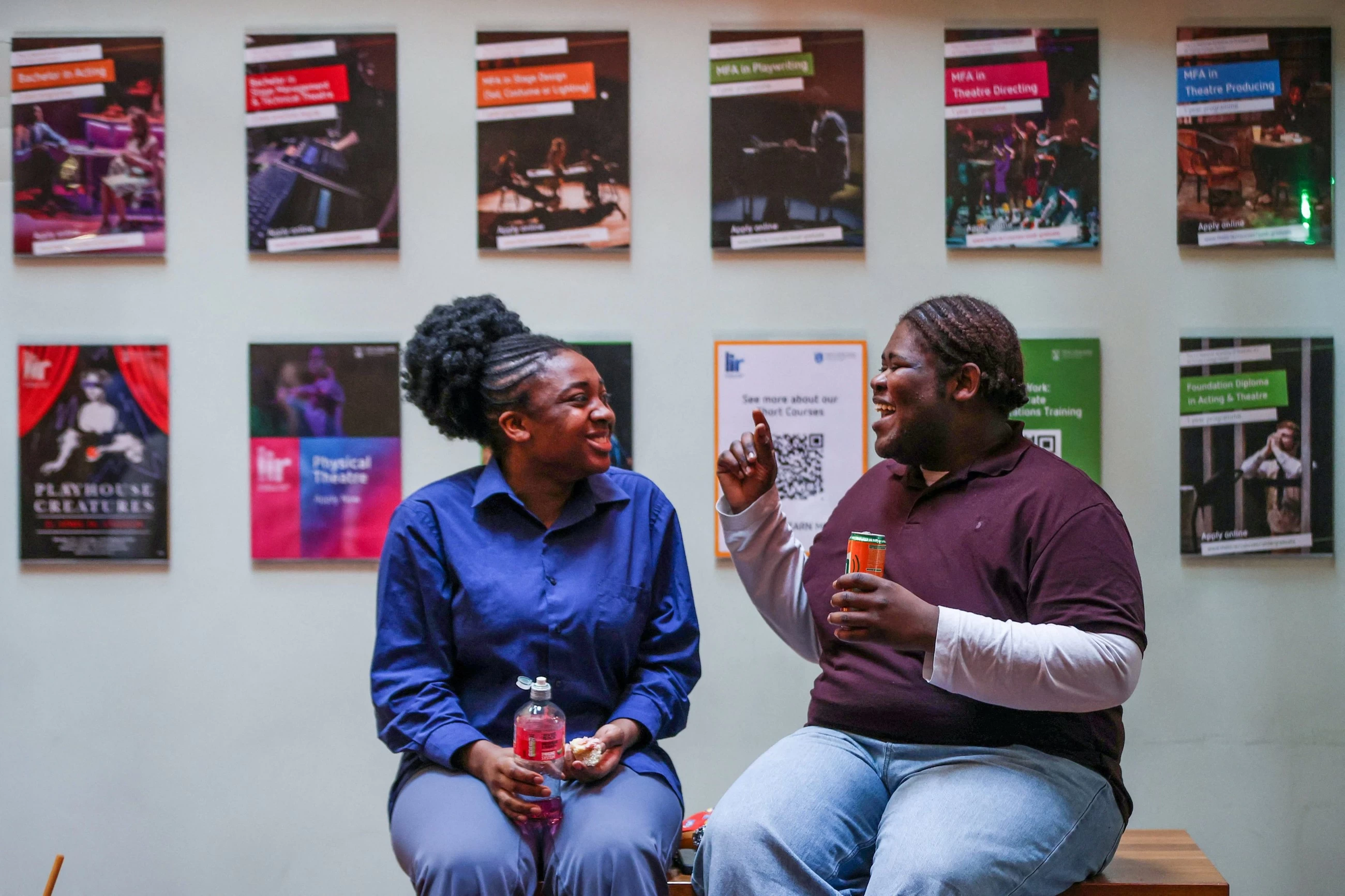
Founded in 2011 and linked to Trinity College Dublin, The Lir Academy — whose alumni include Mescal — admits only small cohorts of just 16 students each year for intensive conservatoire-style training. In the rehearsal room, however, there is little talk of Hollywood.
The focus is on voice, movement, accents and classical text, which produces performers with technical control and — crucially — “authenticity”, Director of Actor Training Gavin O’Donoghue said. One of the most important elements of learning here is the ability to be a spontaneous actor on stage and on screen,” O’Donoghue told AFP on a grey Dublin morning between classes. “Screen acting demands being rooted in emotional and psychological truth, and Irish actors do that really well.” The foundational skills taught at The Lir Academy are reinforced by Ireland’s wider theatre-first tradition in which actors often do stage before screen.
Ireland’s tradition of playwrights — from J.M. Synge who helped set up Dublin’s Abbey Theatre in 1899 to Martin McDonagh whose film “Banshees of Inisherin” was nominated for a raft of Oscars in 2023 — underpins the acting culture from which many screen stars emerge. At the Abbey, Ireland’s national showcase, actors perform in intimate auditoriums where language and psychological detail are paramount, according to its artistic director Caitriona McLaughlin.
“There is something about having to perform live in the moment that makes screen actors who come through Irish theatres exciting to watch,” she said. “Irish actors have it all,” McLaughlin said as she kept an eye on last rehearsals for an upcoming centenary revival of Sean O’Casey’s 1926 Irish classic “The Plough and the Stars”. “They have a strong connection with words so can play into the psychology of a character, they are physical, energetic, and have a great capacity for humour as well as drama,” she said.
Irish actors’ “vocal quality” that allows them to excel at accents like British and American and “lose themselves in the character” also makes them unique, according to McLaughlin.
Actors like Andrew Scott — who honed his craft at the Abbey — Saoirse Ronan, and Cillian Murphy of “Peaky Blinders” fame, can easily play British or American roles due to their aptitude for accents, she said. Opportunities for young actors to build careers at home before Hollywood comes calling are also a factor in the current success, said state film-funder Screen Ireland’s marketing head Louise Ryan.
The group supports debut shorts and features, allowing young actors to lead films and develop their craft, and also promotes Ireland as a film location, Ryan said at the Irish Film Institute in Dublin. “You can get 360-degrees experience with lead roles in indigenous films, and in parallel get a part in a big-budget TV show shot here like “Wednesday” which helps you get those international breaks,” she said. Ireland’s small scale also means directors, casting agents and actors know one another, with talent spotted early and word travelling fast.
“It is easier to break talent here as streaming shows like ‘House of Guinness’ and ‘Say Nothing’ are casting largely from the Irish pool,” Dublin-based casting director Maureen Hughes said. According to the Abbey’s McLaughlin, Ireland has always had the talent “right from the formation of this theatre”, but the difference now is that the world is looking.
“This brilliant wave of talent is being exposed nationally and internationally,” she said.
Meanwhile, legendary movie director Steven Spielberg on Friday defended enjoying the arts as a shared live experience, appearing to take aim at Oscar nominee Timothee Chalamet’s controversial remarks about ballet and opera. The man behind “Jaws” and “Saving Private Ryan” told a South by Southwest audience in Austin, Texas that communal artistic experiences — from cinema to the opera house — must be preserved.
Speaking at a keynote panel to promote his upcoming sci-fi film “Disclosure Day,” the 79-year-old director drew cheers when he invoked the performing arts forms that Chalamet seemed to dismiss in a recent appearance.
“The real experience comes when we can influence a community to congregate in a strange, dark space,” Spielberg said. “All of us are strangers, and at the end of a really good movie experience, we are all united, with a whole bunch of feelings that we walk into the daylight with, or into the nighttime with, and there is nothing like that.”
“I mean, it happens in movies, it happens at concerts and it happens in ballet and opera. And we want that to be sustained.” Spielberg grinned as the audience broke out into cheers. The remarks landed as a pointed rejoinder to Chalamet, who sparked a firestorm last month after appearing to question the cultural relevance of classical performance arts.
Agence France-Presse