Gallery Isabelle presents Are You Human Enough by :mentalKLINIK
- Last updated: January 20, 2026 | 09:59


Muhammad Yusuf, Features Writer
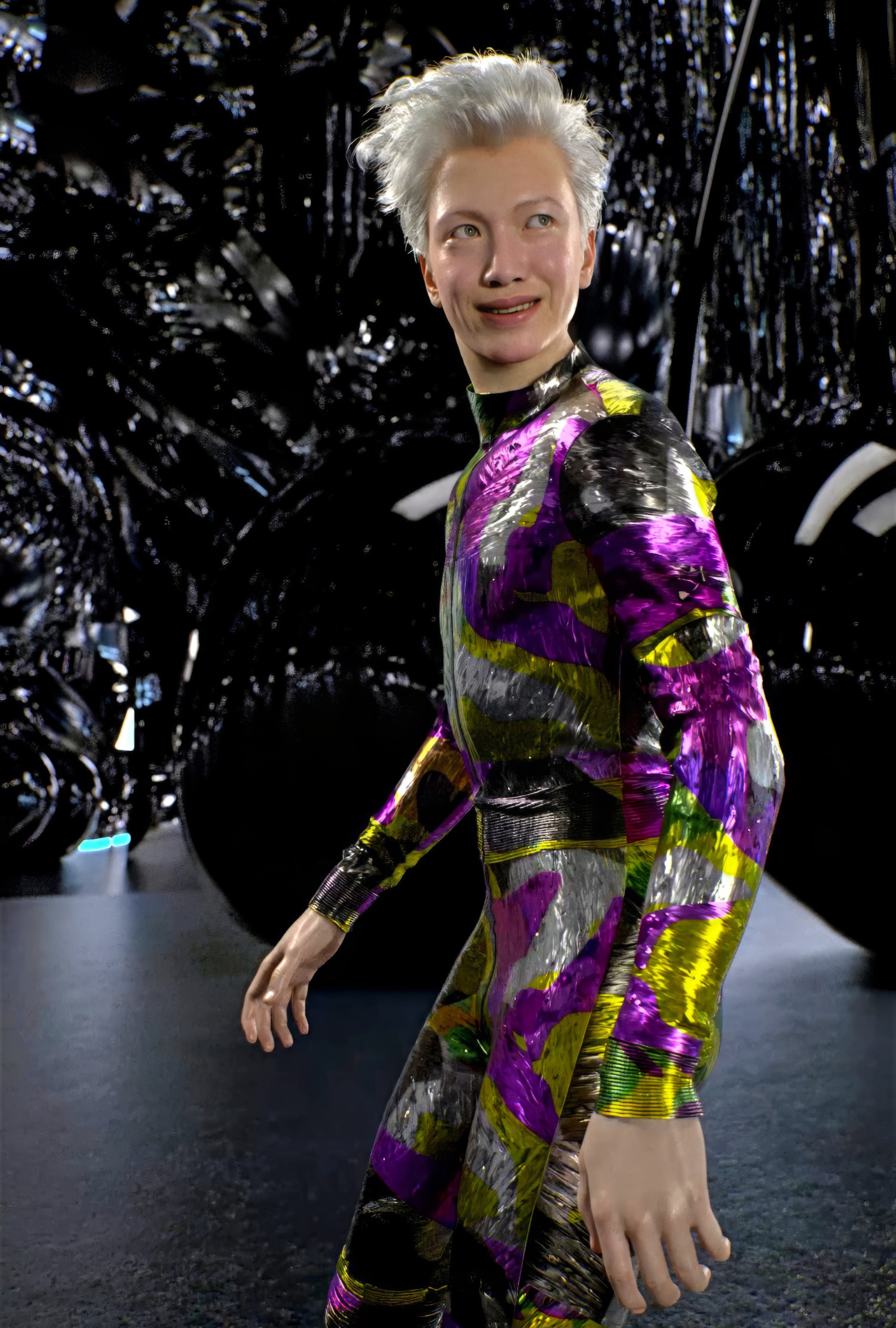
At Gallery Isabelle, Alserkal Avenue, which is hosting the exhibition by :mentalKLINIK titled Are You Human Enough (Jan. 17 – Mar. 20), visitors are welcomed by a video presence: Viola (from the series Lunatic Poets, 2024), one of three MetaHumans created by :mentalKLINIK over a four-year production process. Viola is shaped from data mud, realised through commissioned performances and contributions, including choreography, stage direction, costume design, and hair styling. She appears as a hybrid figure, part digital construct, part embodied memory. :mentalKLINIK is a Brussels-based artist duo from Istanbul, composed of Yasemin Baydar and Birol Demir.
On screen, Viola delivers a delirious monologue, riveting in its performance, from the :mentalKLINIK duo’s signature “contempoetry” - whispering, shouting, and looping a scrambled, senseless language, that nevertheless resounds with pieces of familiar lexicons, echoes emotional tones and collectively held anxieties. The speech oscillates between seduction and disturbance, asking what it means to be “human enough”, at a moment when technological evolution perhaps has outrun emotional and spiritual development.
Human knowledge has long framed reality through perception; but what if reality is experienced otherwise? What if you are a parrot, tuned into invisible spectra, or a lobster, navigating the world through chemical signals and vibrations, rather than images? The exhibition positions perception not as universal, but as contingent — shaped by bodies, systems, and sensory limits. AI appears here not as an ideatic concept alone, but as a practical, living condition. Like the discovery of fire, AI marks an irreversible turn in human evolution – it is a tool that cannot be withdrawn, now that it has been released.
However, while AI can generate responses and support creative processes, it has no interior experience; creativity remains grounded still in embodied perception, memory, intuition, and desire. :mentalKLINIK works within this parallel space, testing how agency persists when creation is mediated by systems that do not have a human feel or intentions.
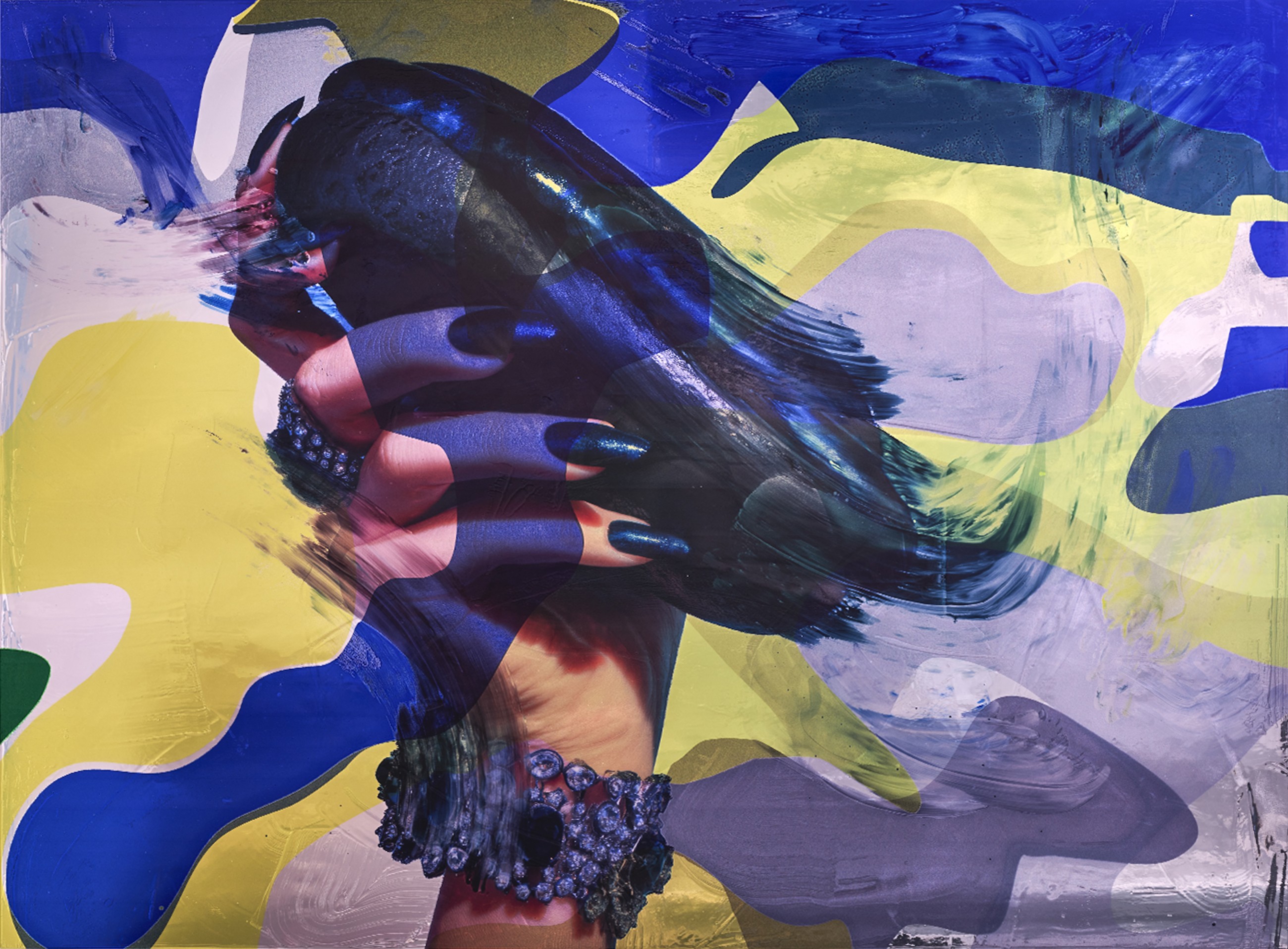
The exhibition unfolds into a 360-degree installation of polished mirrored aluminium panels titled Likewise (2025), where multiple layers of wet ink are altered through hand gestures — rubbing, smearing and eroding the surface, before the ink fully dries. The tactile interventions disrupt the slickness of UV printing, introducing friction, residue, and vulnerability. Camouflage patterns emerge through the spilling of colour and layered imagery referencing advertising, glamour, manicured hands, jewellery, parrots, and lobsters.
More than concealing, the patterns disorient: they confuse the gaze, produce perceptual saturation, and generate visual noise. Once conceived as optical strategies exploring the limits of human sight, camouflage becomes a contemporary condition — not of hiding, but of turning uniform and indistinguishable. Within this environment of “Hyper-Now” (termed so by :mentalKLINIK), of visual overload and compulsive accumulation (adding, layering, enhancing and beautifying), the human figure risks dissolving into the surface, or into interface and pattern, being no longer a subject or character, but a mere carrier of data and aesthetic signals.
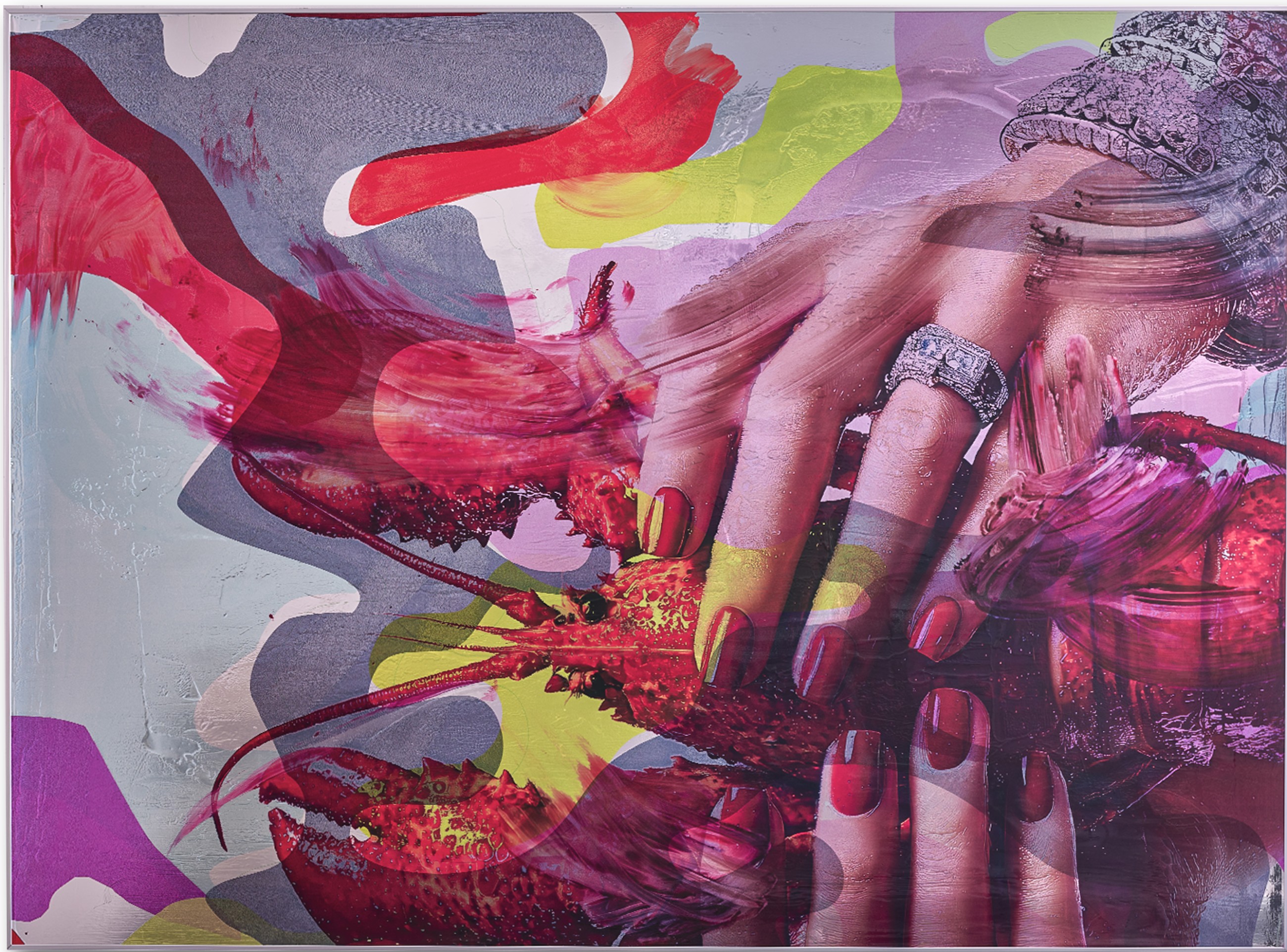
Visual surplus manifests as both strategy and symptom, mirroring a culture that equates excess with meaning and visibility with value. Some works retain subliminal bodily traces, while others reduce the body to abstract gestures and colour fields, extending it into a performative meta-body, scripted by machines. The surface operates as a mirrored field in which the gaze moves continuously between image and self-reflection, never settling into a fixed point of view. Looking becomes a looping act: the painting reflects the viewer as much as the viewer reads the painting, producing an unstable viewing condition, the image and self-perception remaining inseparable.
The instability redirects attention inward, away from systems of validation based on visibility, approval, accumulation, or status. The mirrors function as necessary pauses rather than as ornamental spectacles, opening a space to question intention and presence, asking the questions Why am I here? What am I attentive to? What truly matters? The tension between mechanical processes and manual effort — between industrial plotting and smudged ink — runs all through the exhibition, as :mentalKLINIK attempts to reclaim painting through touch, with each gesture overwriting the previous one, in a creative palimpsest.
Are You Human Enough ultimately asks where agency resides when gestures are both physical and programmed, and whether humanity is defined by control, presence, or by how far it is willing to merge with the systems it creates. With a collaborative practice that began in 1998, :mentalKLINIK’s work operates through paradox and dark humour, examining how contemporary life is shaped by hyper-capitalism, technological systems, and the hidden forces that influence perception and behaviour.
Working across video, installation, sculpture, participatory performances, AI-generated figures and image-based environments, :mentalKLINIK explores visual overload, automation, and hyper-connectivity. Since the inception of the duo, they have developed an evolving lexicon called “contempoetry”, rooted in everyday language and clichés that reveal the face cachée (hidden face) of contemporary society. :mentalKLINIK has an open laboratory approach to process, production, roles, conception and presentation.
Their works are a mix of oxymora and paradoxes, darkly humorous, ranging from immersive time based installations to sculptures and objects that defy categorisation, shifting between emotional and robotic outlooks, between true and false, artificial and superficial, as if everything were a case of falsification. Alongside this linguistic practice, the duo experiment with printing techniques, industrial processes, and architectural materials, including UV printing, polished metals, aluminum trusses, and ready-mades, to create immersive environments that blur image, object, and space, prompting viewers to consider how to find an anchor within increasingly saturated environments and automated systems.