Tashkeel presents calligraphy creations of master calligrapher Wissam Shawkat
- Last updated: January 18, 2026 | 11:27


Muhammad Yusuf, Features Writer
Hala Badri, Director General of Dubai Culture and Arts Authority (Dubai Culture), visited the ‘Al Wissam Script’ exhibition by artist and calligrapher Wissam Shawkat, currently on view at Tashkeel in Nad Al Sheba, Dubai, on till February 11. During a walkthrough organised by Tashkeel, Badri viewed a selection of artworks and compositions by the artist, spanning more than two decades of research and experimentation. The exhibition presents Al Wissam Script as a living, evolving approach, highlighting the aesthetic richness of Arabic calligraphy, its deep cultural roots, and its continued capacity for expression and development in contemporary contexts.
The exhibition presents a wide range of works that demonstrate the visual qualities of Al Wissam Script and its flexibility, which allows letterforms to be integrated into contemporary design and visual identity applications, while remaining true to classical principles. The script draws on multiple schools, including Eastern Kufic, Thuluth, Jali Diwani, and Ottoman Tughra. Through sustained experimentation and refinement, Shawkat has reinterpreted these traditions and moulded them into a contemporary system that brings together traditional authenticity and cutting-edge innovation.
Accompanied by Shaima Rashed Al Suwaidi, CEO of the Arts, Design and Literature Sector at Dubai Culture, Badri commended the exhibition’s unique works and ideas, noting how they convey Shawkat’s vision and contributes to advancing Arabic script and expanding its reach. She reaffirmed Dubai Culture’s support for the art form and hailed its rank as a powerful, expressive, and aesthetic medium. She also underlined the Authority’s efforts to build a sustainable environment that supports calligraphers and encourages the preservation, development, and elevation of the discipline.
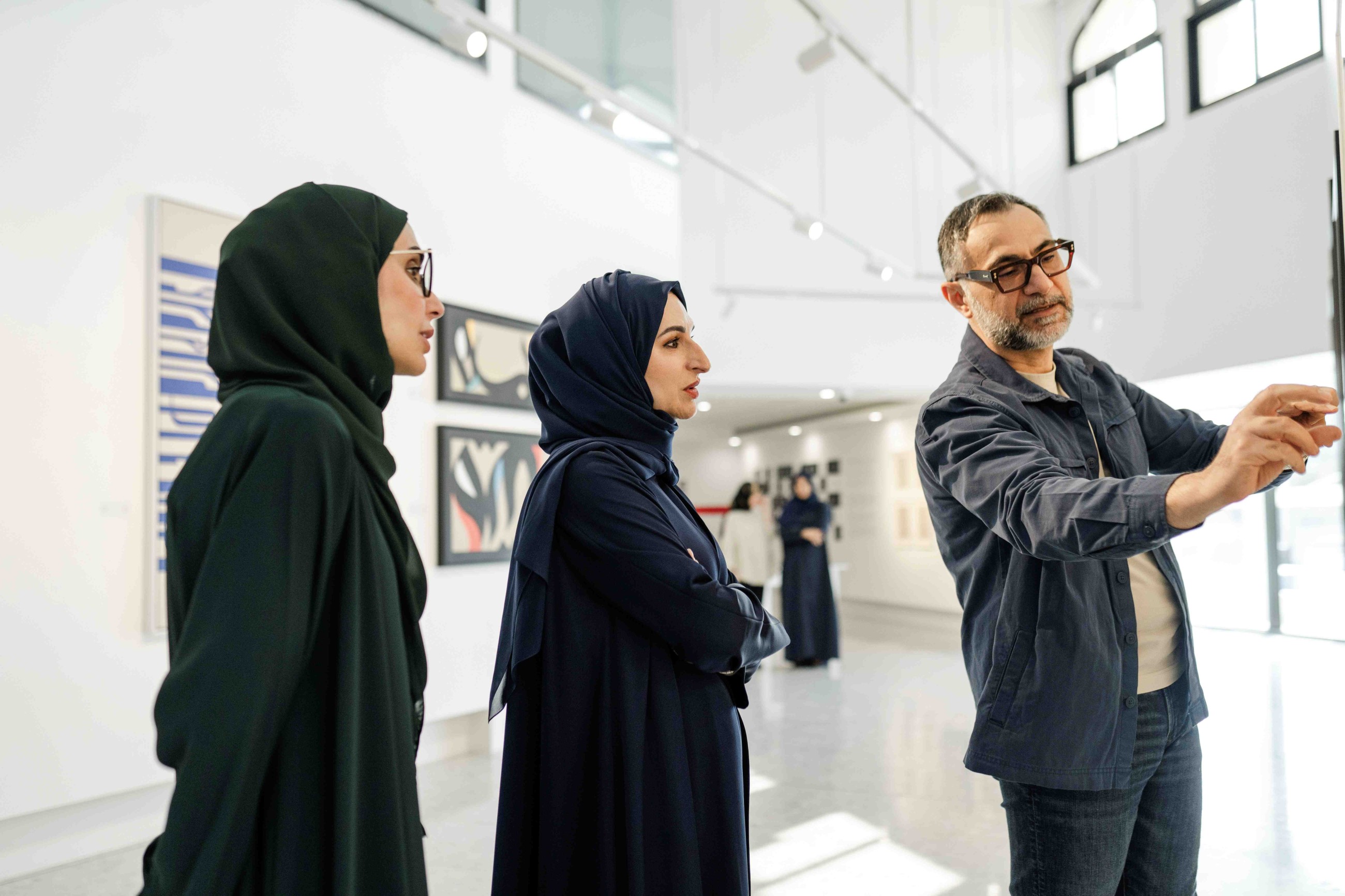
The visit reflects Dubai Culture’s ongoing support for practitioners across the cultural and creative industries and its commitment to enabling artists to share their practice with the public. The efforts align with the Authority’s mandate to strengthen Dubai’s position as a global centre for culture, an incubator for creativity, and a thriving hub for talent. For Wissam Shawkat, born in Basra in 1974, it was the form of four letters from the Arabic alphabet written across a school blackboard that started him on a journey that shaped him, both in early years and adulthood. He was first formally introduced to Arabic calligraphy at the age of 10 by his primary school teacher, Muhammad Ridha Suhail.
Shawkat recalls finding peace and patience writing and repeating calligraphic letters on the dusty tiles of a makeshift shelter during a heavy aerial bombardment during the Iraq-Iran war. Spurred on by supportive parents, he became his own tutor. His teen summers were spent lettering for a local sign shop, before he began studying for a degree in Civil Engineering at Basra University, graduating in 1996. The life as a Civil Engineer, though, was not Shawkat’s destiny and the point where his affinity for letterforms would wait no longer, quickly arrived.
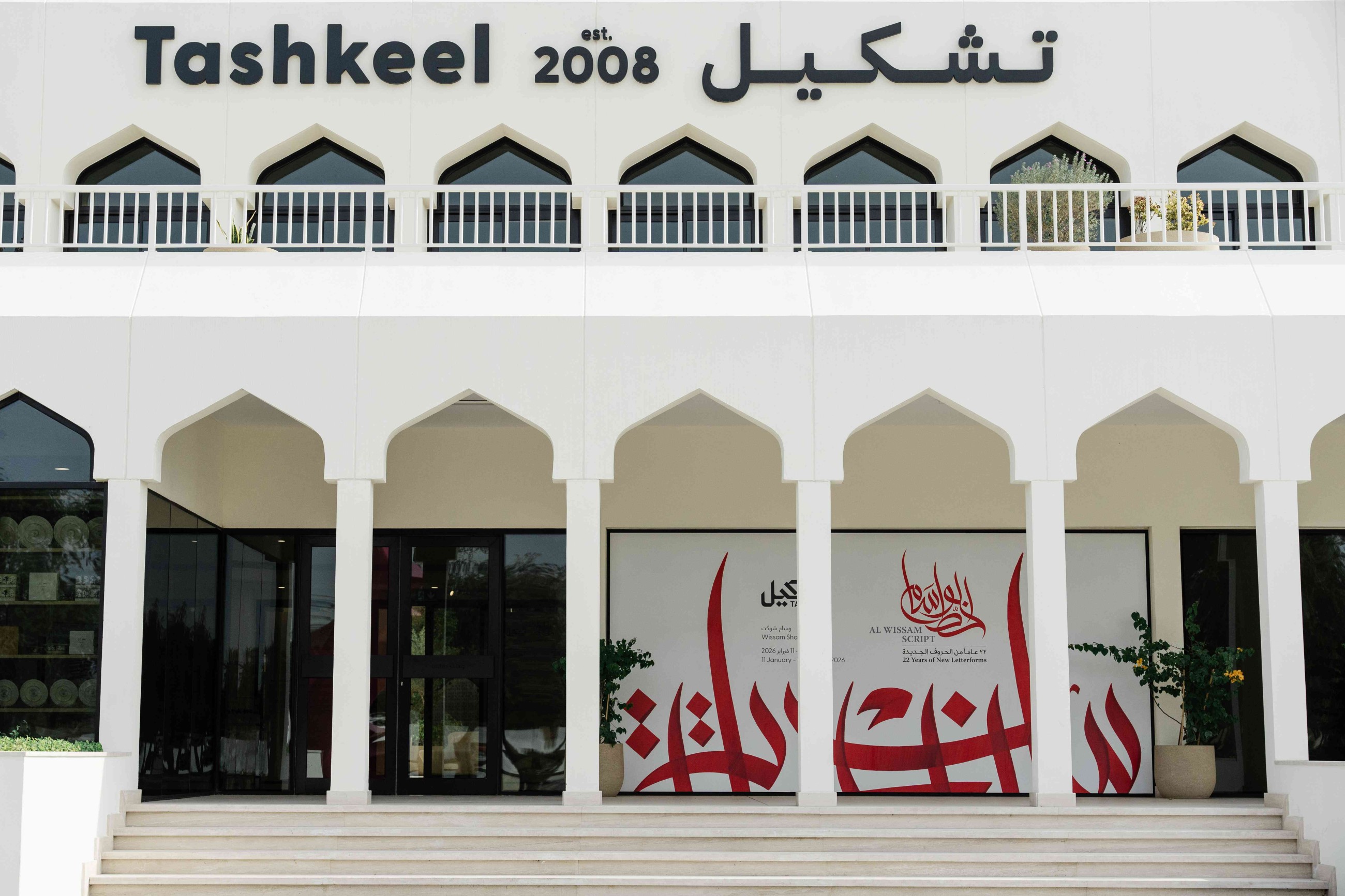
He has become known for a new calligraphic style - Al Wissam - which references a number of traditional scripts including Sunbuli, Jali Diwani, Eastern Kufic, and Thuluth, bringing them together with modern design. It has been said that Wissam Shawkat is a rule-breaker. He may not freely apply the loaded label to himself, but he faces many challenges in his journey as a calligrapher. The manner he goes about making new work, which requires employing traditional tools and materials to produce a contemporary aesthetic, is one of them. But the liberating juxtaposition of using handmade paper, reed pens and traditional inks to create inventive works that take Arabic calligraphy to another dimension, points out what calligraphy is and can be. It is a central Calligraformic characteristic that merges the graphic qualities found in classic letterforms with western Abstraction and Cubism.
Shawkat is acknowledged as a champion of calligraphy, though his less prescriptive route to Arabic calligraphy perhaps leaves him on the periphery of strictly orthodox traditions. But Tashkeel points out that “his work departs from classic calligraphy, yet maintains its craftsmanship.” Luxhabitat.ae says that “his technique, “Calligraforms”, which he pioneered himself, leans away from traditional practices and focuses on the form of the script instead, portraying modern symbolism and highlighting the beauty and multiple angles of his works. The results are spectacular and differ greatly from piece to piece ...”
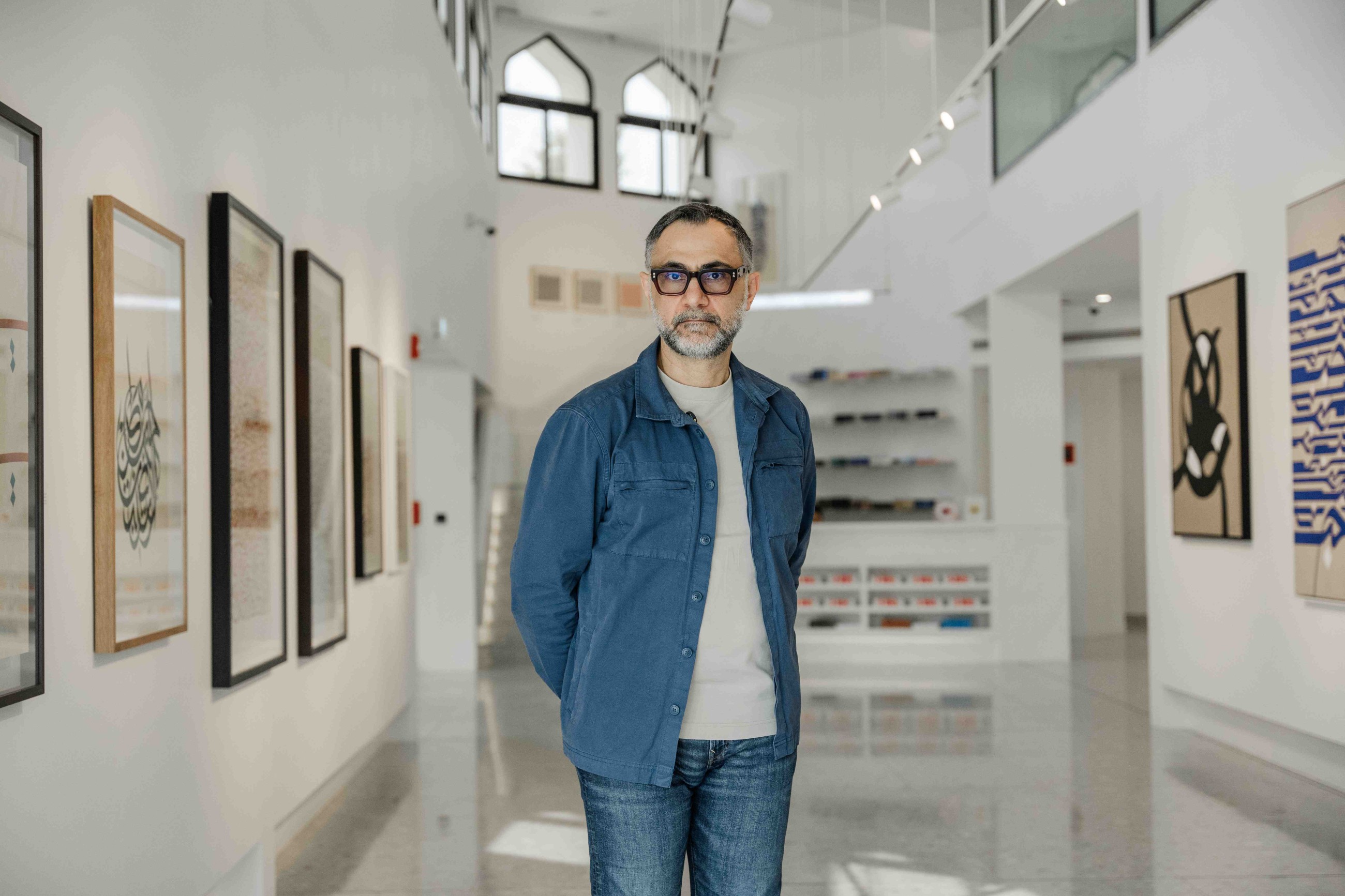
Shawkat is largely self-taught in the rigorous medium of calligraphy, attaining mastery through book research, visits to masters, and studying museum and library collections in the region. He has received numerous prizes for his calligraphy and has participated as both an artist and committee member at multiple editions of Sharjah Calligraphy Biennial and Dubai International Arabic Calligraphy Exhibition. His calligraphy and typography designs have appeared in several books and magazines about art and design.
In his interview to luxhabitat.ae about his artistic inspirations, Shawkat said that “to be honest there is nothing specific. I am influenced by beauty that you can find all around you, whether here in Dubai or abroad. Of course, when I travel I visit new places and museums. I really enjoy contemporary and modern art; I enjoy movements like Cubism, futurism, abstract, expressionism, and hard-edge painting. I get inspired by the beauty in life - this could be something as simple as a text or a walk somewhere new ... I think the city of Dubai has a big influence on my work, because Dubai is always moving forward and it is very futuristic. It helps me look at my art and see how I should continue to evolve and develop too.”