Timeless stitches, timely show: Maraya wraps up Palestine embroidery showcase
- Last updated: January 10, 2026 | 10:01


Muhammad Yusuf, Features Writer
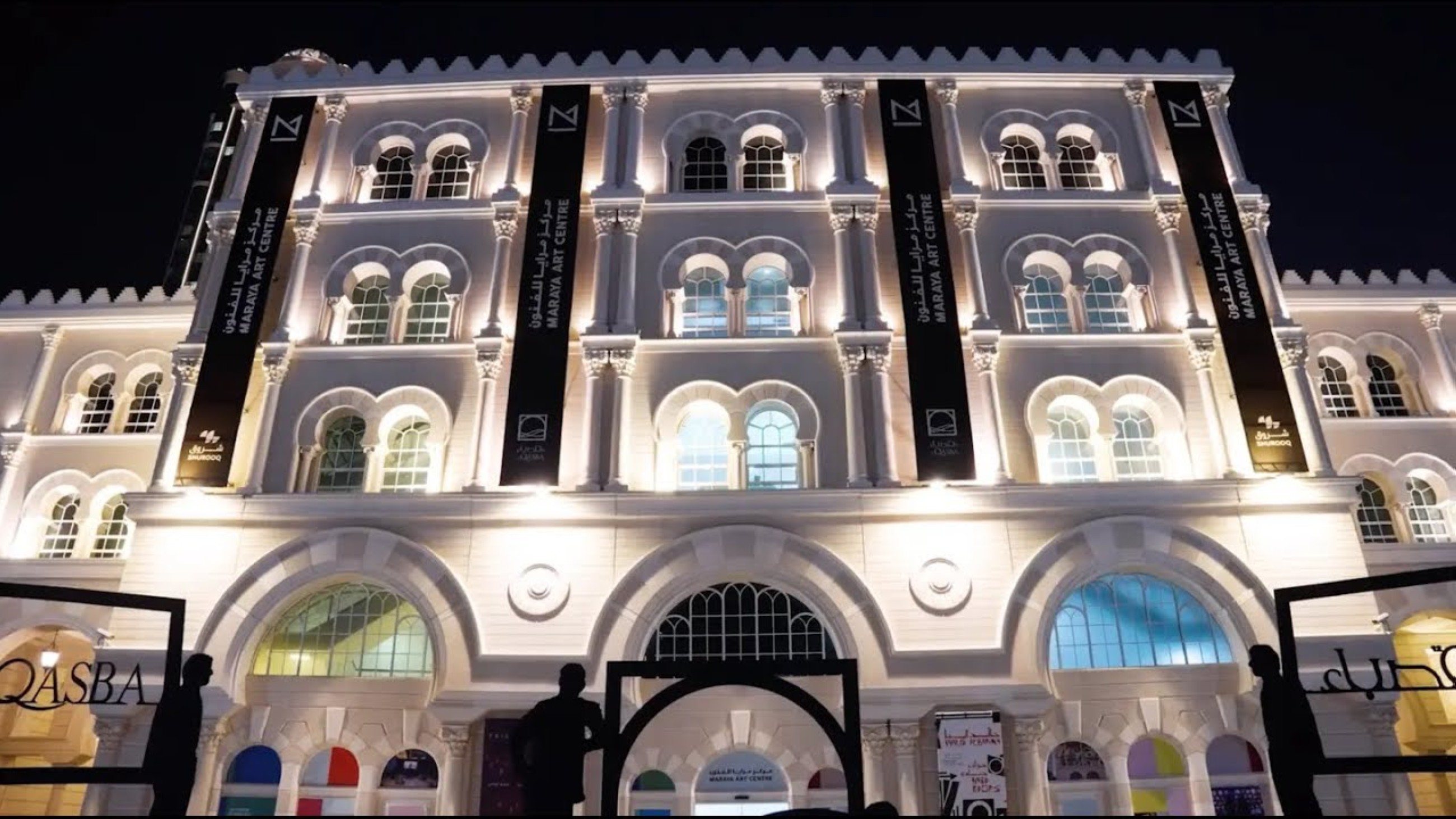
Maraya Art Centre, Al Qasba, Sharjah, has just brought the curtains down on SILA. All That Is Left to You, a landmark exhibition dedicated to the cultural language of Palestinian embroidery, tatreez. Curated by Cima Azzam (Maraya Art Centre), Noor Suhail (1971 – Design Space), and Rula Alami, Founder of SILA exhibition series, it brought together twenty-five contemporary artists and designers.
The Arabic word sila means “connection”; the exhibition highlighted the threads that bind past to present, heritage to innovation, and personal stories to collective identity. Tatreez offers not only income and purpose, but in times of adversity, especially amid the ongoing devastation in Gaza, it is an act of survival and defiance, stitched thread by thread against the threat of erasure.
Participating artists included Amer Shomali; Abdel Rahman Katanani; Areen Hassan; Aya Haidar; Bokja; Cristiana de Marchi; Dahouk Chamsi-Pasha; Farah Behbehani; Hazem Harb; Katya Traboulsi; Joanna Barakat; Leila Jabre Jureidini; Liane Al Ghusain; Maysaloun Faraj; Nada Debs; Naima Almajdobah; naqsh collective; Nour Hage; Omarvis; Sama Alshaibi; Samar Hejazi; Samia Halaby; Tala Hammoud Atrouni; Steve Sabella and Zaid Farouki.
The walls of the space were painted grey, the colour of cement dust and smoke after bombardment, embodying the brutality of Gaza’s destruction. But against the grey, colour emerged as resistance, with flourishing red threads, green leaves and golden inscriptions, each asserting life, even inside the dust.
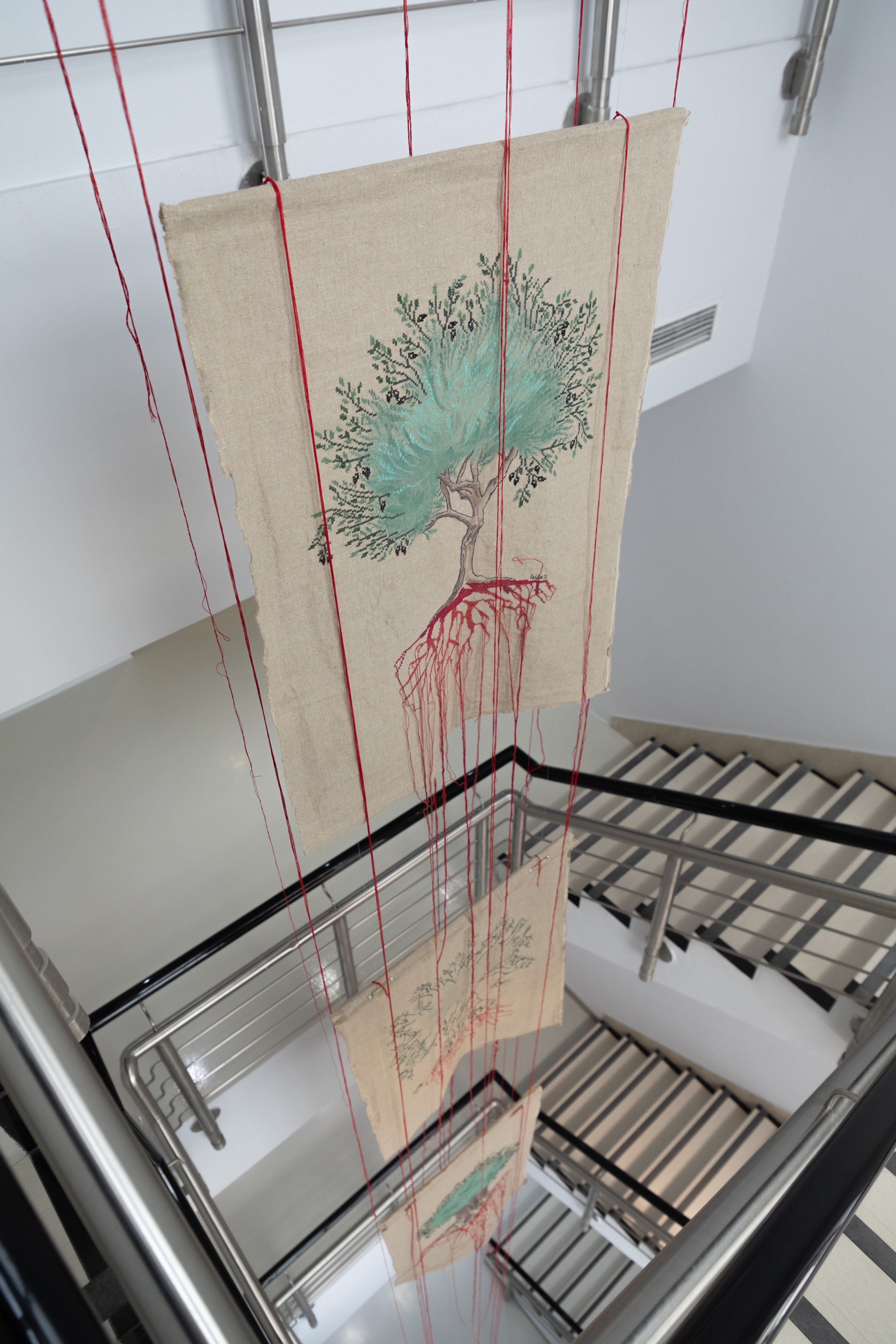
Hazem Harb’s showed the portrait of a Palestinian woman in Places and Existence. Her face seemed to dissolve into the surrounding grey. Abdel Rahman Katanani’s Our Mothers and Sisters, anchored the viewer in the reality of a refugee camp. Aya Haidar’s Resistance series carried four handkerchiefs, Tatreez, Cooking, Water, and Olive Groves, embroidered with scenes from everyday Palestinian life, transforming the handkerchief into an act of defiance. In her second work, Rooted, the scent of zaatar (used to flavour food) was released, the aroma evoking the hills of Palestine and its kitchens.
Liane Al Ghusain’s Temple of Steadfastness was an embroidered map of endurance and her Womb Amulets were reimagined as emblems of resilience. Together, the works explored the idea of steadfastness. Farah Behbehani’s Remembrance series consisted of five embroidered panels, each representing a medicinal plant from the Levant - ḥarmal, ‘akkoub, summaq, ghār and za‘atar - reminding one that resilience in Palestine is as much ecological as it is human. In Stitching Unity, Hazem Harb linked fractured histories. Omarvis’s The Mantle of Justice draped the wall like a ceremonial robe, a garment worn by generations. Areen Hassan’s Weaving the Land Back, recalled the geography of terraces and valleys, in a map of yearning for the land.
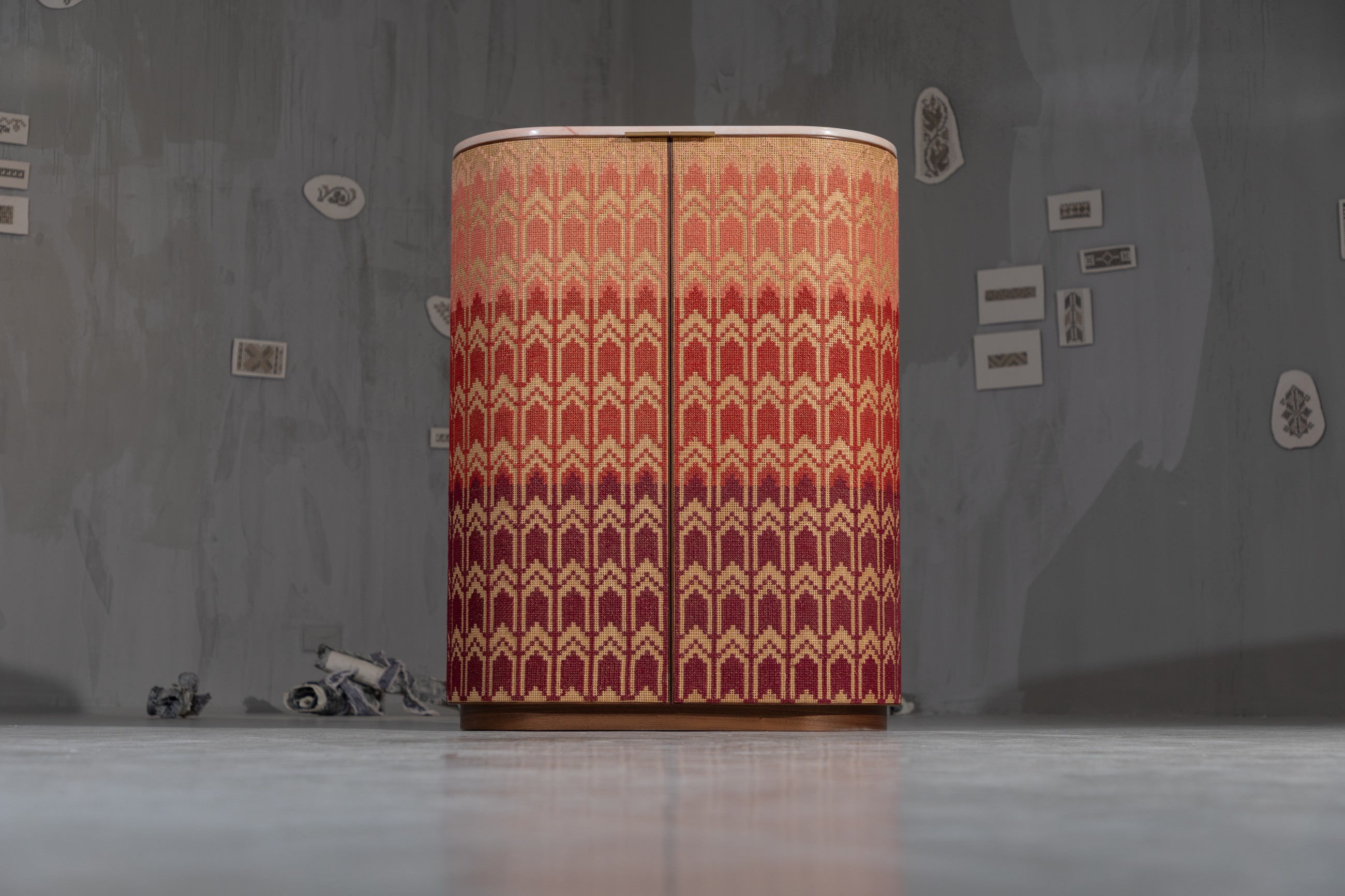
Bokja’s Hands Off My Zaatar tapestry included the figure of Handala, the barefoot child created by Naji al-Ali. Handala is a prominent national symbol. Oranges from Yaffa, the pre-1948 emblem of Palestinian prosperity, also bloomed. Katya Traboulsi’s Perpetual Identities sculpture series resembled rocket surfaces, but were sheathed in Palestinian embroidery, with soft threads confronting the weaponry. The white embroidered patterns which formed rows in Cristiana de Marchi’s Untitled works on canvas, resembled graves.
Naima Al Majdobah’s The Sound of Stitch filled the space with sound. Her installation translated embroidery patterns into musical notes. Katanani’s Cypress Tree from Qa’ Finjan el-Qahweh, transformed barbed wire into arboreal form, depicting the cypress, an ancient symbol of mourning in Palestinian culture. Amer Shomali’s Broken Weddings I and II, consisted of embroidery spools mounted on wooden panels, arranged with the precision of gravestones. The Inaash Panel by Samia Halaby made with artisans Najat Bachir and Fatima Moussa, served as a testament to Palestinian women’s artistry.
Nada Debs’s Treasure Chest revealed twelve embroidered panels, each representing a Palestinian thoub (robe) from a village, making it a portable museum of a nation dispersed, yet preserved in thread. Tala Hammoud Atrouni’s sculpture Frogs in the Pond captured life that persists even under threat. The naqsh collective’s Al Qubba’s intricate pattern recalled both the collar of a traditional Palestinian thoub and the dome of a sanctuary. Leila Jabre-Jureidini’s Homeless had outlines of houses, opening into emptiness. Mayssoun Azzam’s historic thoub from Beer el-Sabe, dating to around 1945, mapped a village and life before displacement. Maysaloun Faraj’s painting From Darkness Emerges Light offered its message, as seen in its title. Samar Hijazi’s Intricacies of Wholeness was a constellation of stitched panels, each one interdependent. Her installation Transgressed Boundaries spoke of the links between self and collective, between what is fixed and what moves.
Joanna Barakat’s Like was a large embroidered textile, which lay over a wooden box, shaped like a child’s grave. To stand before was to feel implicated: one’s reflection appeared in the glass, making him ill at ease. Like was both a lament and an accusation. Dahouk Chamsi-Pasha’s ceramics in Threaded Whispers of Dreams and in Between Loss and Survival, recalled domestic relics salvaged after a storm, each carrying traces of hands that refused to abandon them. Nada Debs’s Nakhla picturised the palm tree.
Nakhla is a sign of generosity and steadfastness in the Gulf and the Levant. Steve Sabella’s Everland III and Everland IX shimmered like mirages, refusing geography and suggesting that homeland is a condition carried within. Sama Al Shaibi’s Eternal Love Song and Spools were photographic self-portraits of the artist, a reminder of the time when Arab women were photographed as exotic symbols, by Orientalists. Al Shaibi reclaimed the right to self-representation. Zaid Farouki’s The Dream of Return took the form of an ornate headdress with coins, their clinking echoing the rhythm of migration. Nour Hage’s Study of a Cypress Tree, an indigo-dyed textile, was dedicated to the children of Gaza. Rula Alami said that “SILA is a tribute to Palestinian tatreez as a powerful language of resistance and persistence, connecting past and present, craft and art, tradition and modernity.”
Cima Azzam and Noor Suhail said that “with SILA. All That Is Left to You, we wanted to present tatreez not only as a practice rooted in Palestinian heritage, but also as a contemporary design language that continues to evolve.” “The title of this exhibition,” noted Nada Askander, Senior Communications and Content Specialist, Maraya Art Centre, “is borrowed from Ghassan Kanafani’s novella All That Is Left to You. Kanafani’s words ask what remains when one’s home is taken. This exhibition gathers voices that refuse to vanish. All That Is Left to You is not a lament. It is a declaration that something always remains.”