Coalition challenge
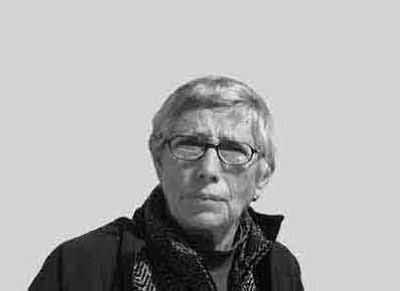
Michael Jansen
The author, a well-respected observer of Middle East affairs, has three books on the Arab-Israeli conflict.
- Last updated: November 12, 2026 | 14:16


The “Never Bibi” syndrome is driving efforts to form a new Israeli government without Binyamin Netanyahu who is Israel’s longest-serving prime minister having served three terms and been from 1996 to 1999 and from 2009 to 2021 and 2022 until now. If no government is formed, a new election will be called within 90 days, with Netanyahu staying on as a caretaker prime minister. He has stirred controversy during his three terms in office. He has been charged and indicted for fraud, bribery, and breach of trust in three cases.
Last Saturday night, President Isaac Herzog asked opposition Yashar party head Gadi Eisenkot to cobble together a durable government from disparate parties and factions. Eisenkot leads the so-called “change bloc” or the “anti-Bibi bloc.” When he accepted the appointment, he warned that not all his campaign promises could be kept and coalition forming would necessitate “creative and unconventional” political compromises.
While Netanyahu’s Likud has 53 seats in the Knesset, Eisenkot’s bloc won 48 and Palestinian parties 19. Since in the outgoing Knesset Netanyahu’s bloc held 68 seats, well above the 61 needed to form a majority in the 120-seat legislature, this election has been a major disaster for him.
The “change bloc” is currently composed of Together, Israel Beitenu (Israel is our Home), Yashar and The Democrats. Together was founded in April 2026 by former prime ministers Naftali Bennett and Yair Lapid and their parties Bennett 2026 and Yesh Atid. The alliance ran in the 2026 Israeli legislative election with Bennett as its leader, winning 12 seats. It is a centrist to centre-right alliance, which is meant to unify Lapid’s liberal, secular base with Bennett’s right-leaning, nationalists to create an electoral bloc.
Israel Beitenu is a right-wing party which describes itself as “a national movement” that adopts a hard line towards the peace process and integration of Palestinian citizens of Israel. It favours the “two-state solution” involving the creation of a Palestinian state and population exchanges between Arab-majority areas for illegal Jewish settlements in the West Bank.
Yashar is a centrist political party established and led by Eisenkot, the former army chief of staff and National Unity Knesset member. It won 21 seats in the election and, according to opinion polls, has gained in popularity, becoming Netanyahu’s chief challenger, making Eisenkot a leading candidate for the premiership.
The Democrats is a social democratic and Zionist political party formed in July 2024 by the merger of the centre-left Israeli Labour Party and the left-wing Meretz party. It is led by Yair Golan, a former deputy chief of staff who led the Labour Party before the merger. The party describes itself as “the political home of the liberal-democratic camp in Israel”, and a part of the “Zionist left.” The party won eight seats in the 2026 election.
Ultra-Orthodox religious parties, Western Ashkenazi United Torah Judaism with 7 seats, Eastern Orthodox Shas with 6 seats and right-wing Religious Zionism with 6 seats have traditionally backed Netanyahu but are negotiating with Eisenkot. Their chief objectives are to promote religious practices, maintain funding and secure their political objectives, including colonisation of the occupied West Bank.
The Palestinian parties – the Joint List and Ra’am – won a record high of 19 seats, nearly doubling their current 10 seats. They could have turned the anti-Netanyahu bloc into a comfortable majority but all Zionist bloc members excepting The Democrats have so far rejected cooperation with the Joint List or Ra’am. The latter is a coalition of Arab-majority parties established in 2026 by Hadash, Balad and Ta’al
Hadash, the Democratic Front for Peace and Equality, is a left-wing to far-left political party which is connected to Israel’s Communist Party (Maki), alongside the Black Panthers and other Jewish and Arab left-wing movements. Anti-Zionist Hadash calls for socialism, communism, Jewish-Arab cooperation, social justice, workers’ rights, and the two-state solution.
Balad is a left-wing/far-left Palestinian nationalist party in Israel led by Sami Abu Shehadeh who served as a Knesset member for the Joint List from 2019 to 2022. Balad rejects the definition of Israel as a “Jewish and democratic state” but for transforming Israel into a binational or democratic “state of all its citizens” with cultural and national autonomy for the Palestinian minority.
Ta’al, the Arab Movement for Renewal, is an anti-Zionist Arab nationalist party led by Ahmad Tibi who has been a Knesset member since 1999. In August 2026, Ta’al joined Hadash and Balad in re-establishing the Joint List ahead of the 2026 election. The list was dissolved in 2019 and 2021 due to the defection of Ta’al and Ra’am.
Some 67 lawmakers, including those from Palestinian parties, supported Eisenkot to form the next government while only 46 backed Netanyahu. Eisenkot has ruled out Including Palestinian parties in his coalition although this would give him a 67-seat bloc. Israelis expect their governments to be both Jewish and Zionist while Palestinian parties are neither. Consequently, Eisenkot has focused on two ultra-Orthodox parties, United Torah Judaism and Shas, which would give him 61 seats. He could also form a government with fewer than 61 seats if he wins a Knesset confidence vote.
Palestinian parties have endorsed Eisenkot, granting him a “considerable margin.” He could even form a minority government with outside backing from the Palestinian parties. During the campaign, Netanyahu warned that a government formed by the opposition bloc with support from Arab-led parties would lead to Israel’s collapse. As could be expected, Netanyahu has condemned this option. He stated, “Such a government, dependent on Islamists, will dismantle the state of Israel from within.” He even said this would involve “terrorists” and “terrorism.”
Al Jazeera’s Noor Odeh observed that Eisenkot has said he does not want to form a government with Palestinian parties but stated “they both share quite compelling reasons to get rid of Netanyahu.”
Photo: TNS