Inside Machines Can Think 2026: Where research, infrastructure, and AI leadership converge
- Last updated: December 16, 2025 | 18:30 ..



Gulf Network
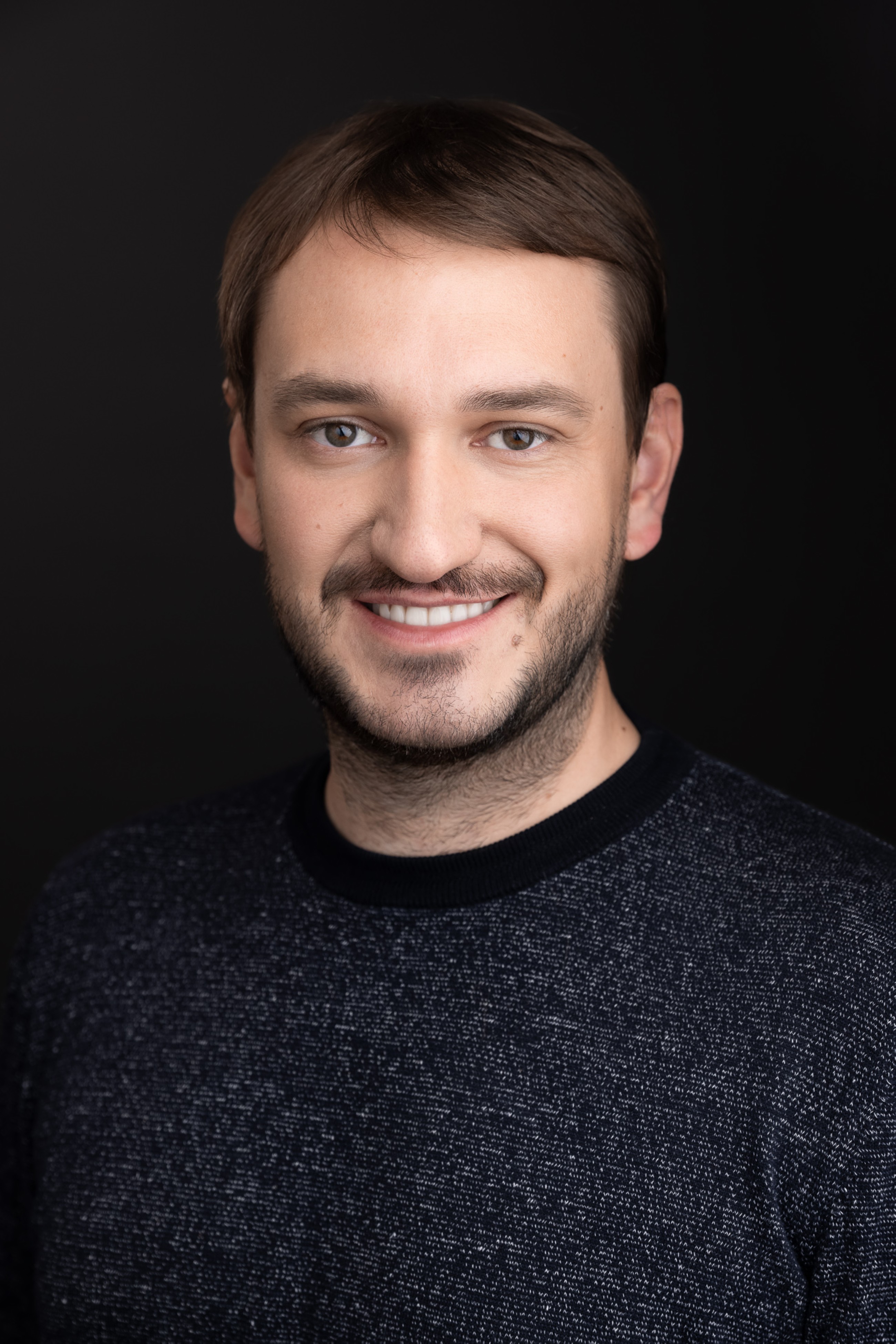
Machines Can Think 2026 will showcase how AI is evolving from research labs into national infrastructure. Founder and CEO of Machines Can See and Polynome Alexander Khanin explains how the summit aligns technical innovation with policy, investment, and leadership priorities.
1. What can attendees expect in terms of tracks, topics, and focus areas at Machines Can Think 2026?
Machines Can Think’s two-day program is built around three tracks that reflect how AI is evolving across research, infrastructure, and leadership. The Co-Evolution track looks at the relationship between human and machine intelligence and the role of education, skills, and governance. The Tech track examines frontier architectures, national-scale systems, and advances in areas such as world models, life sciences, energy, and telecom. The C-Level track is designed for decision-makers who want practical guidance for responsible, ROI-driven adoption. Together, these tracks give a clear view of the intelligence and infrastructure shaping the next decade.
2. Can you highlight any sessions or workshops that are particularly groundbreaking?
The program includes more than 50 keynotes, over 10 hands-on workshops, and demo zones that let attendees engage directly with breakthrough AI technologies and the teams behind them. The opening panel discussion, UAE Stargate: Building a National AI Fabric, examines how nations can align compute, data, talent, and governance to accelerate adoption while safeguarding sovereignty. Government, industry, academia, and civil society will collaborate to define a shared vision, strategic priorities, and a practical implementation roadmap.
Attendees will be welcomed by H.H. Sheikh Nahyan bin Mubarak Al Nahyan, Minister of Tolerance and Coexistence, and Alexander Khanin, Founder and CEO of Machines Can See and Polynome. The technical agenda moves into world models, next-generation AI datacentres, and foundation models for biology, while practical workshops across clean energy, climate resilience, life sciences, and telecom give participants usable methods for real-world implementation.
3. Which leading AI experts will be speaking at the summit, and what insights will they bring?
The summit brings together global voices shaping the future of AI. Yann LeCun, VP and Chief Scientist at Meta, will speak on objective-driven AI, focusing on world models, reasoning, and efficiency as foundations for more autonomous systems. Marc Hamilton, Vice President of Solutions Architecture and Engineering at NVIDIA, will speak on the next generation of AI datacentres. Manohar Paluri, Vice President of AI at Meta, will explore perception-to-action systems and the evolution of multimodal AI. Faris Al Mazrui, Head of Technology Investments at Mubadala, will provide an investor’s view of national-scale platforms and the economics of emerging technologies.
Michal Valko, Chief Models Officer at a Stealth AI Startup, will examine the gamification of large language models. Serge Belongie, Director of the Pioneer Centre for AI at Copenhagen University, will share breakthroughs in foundation models, computer vision, and biological modelling. Their combined expertise gives attendees a wide lens on where research, industry, and investment are converging.
4. How does the summit address technical AI advancements and the strategic side of AI adoption?
The event is structured to give equal weight to both sides of the ecosystem. Technical sessions break down the architectures, training methods, and infrastructure innovations driving progress in AI. Parallel sessions in the C-Level track translate these advances into strategic decisions that organisations must make, from governance and risk management to platform selection and operational scaling. Workshops reinforce this connection by guiding participants from abstract capability to practical deployment. The goal is to ensure that both engineers and executives leave with a shared understanding of what is possible and how it can be applied responsibly.
5. How is the event helping to advance the UAE’s AI strategy and position Abu Dhabi as a global AI hub?
The summit supports the national agenda by gathering creators, investors, policymakers, and researchers around the systems that will define the next stage of AI adoption. With AI projected to add $100 billion to the UAE’s GDP by 2030, there is strong demand for platforms that link research with deployment and shorten the path from experimentation to value. Machines Can Think does this by showcasing national-scale projects, promoting talent development, and deepening collaboration between government and industry. Abu Dhabi’s vision for an AI-native government is reflected across the program, positioning the city as a leading place for innovation and long-term investment.
6. What are the top three reasons to attend Machines Can Think 2026?
The summit gives rare direct exposure to the people shaping the next generation of AI and those building national platforms, global research labs, and frontier model companies.
The second is practical knowledge. Workshops and technical labs focus on implementation rather than theory, empowering attendees with information to strengthen their own product development, research, and organisational strategy.
The final advantage is the network. Machines Can Think brings together a concentrated mix of corporates, investors, founders, and researchers who are building toward the same horizon. The summit acts as a catalyst for new opportunities, partnerships, and career growth.